When Art Meets Algorithm

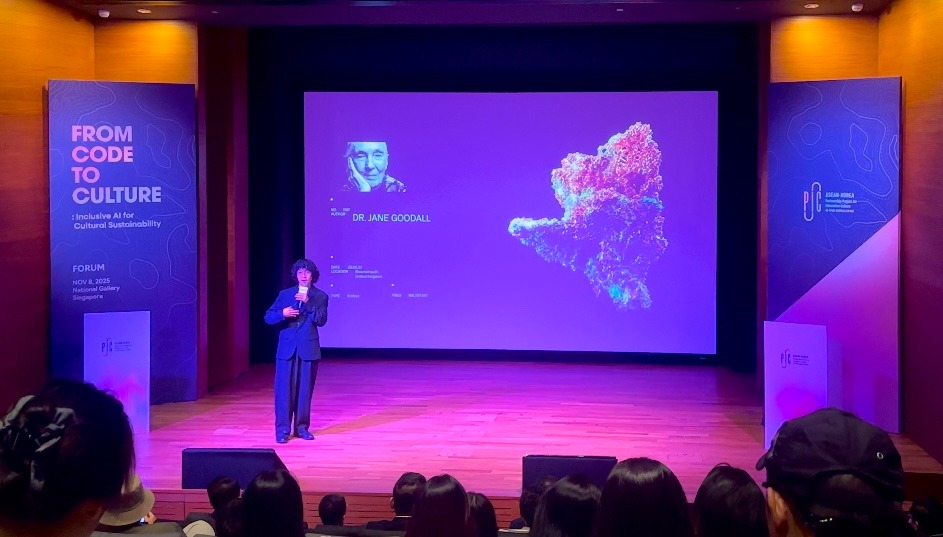
From the beginning of AI commercialisation, ethical debates towards its usage has been a never-ending discussion. Specifically towards the arts and culture sector, the dialogue surrounding artists and institutional roles being replaced by AI is an undeniable topic.
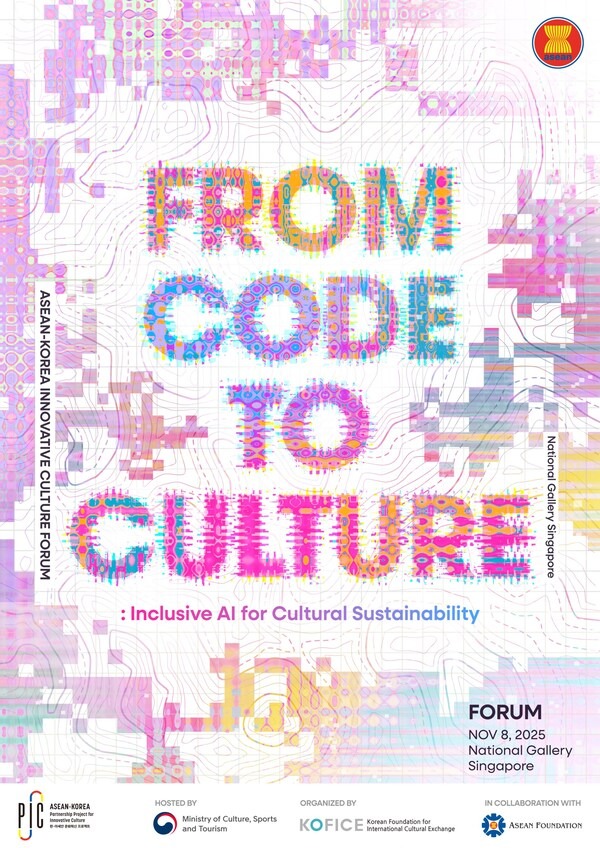
On the other hand, there are creatives who have not only embraced—but immersed themselves in utilising technology to enhance or form new practices. Upon attending the recent Korea-ASEAN Cultural Innovation Cooperation (PIC) on 8 November 2025, new perspectives on AI’s integration with the arts were shared.
AI and Cinema?
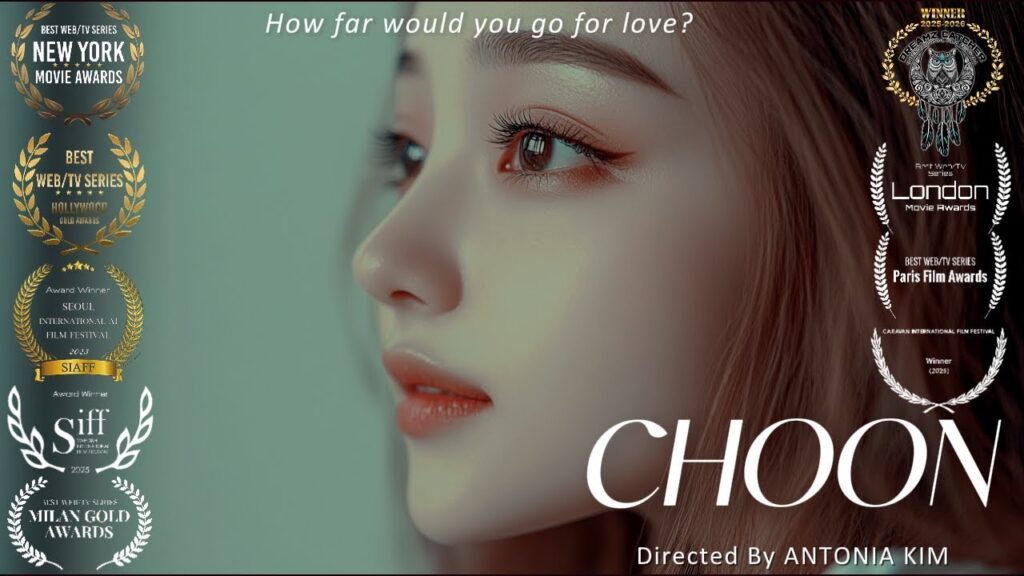
A former lead producer at KBS, Antonia Kim is an Al film director and founder of the independent production company AITONIA.
Kim expressed that being able to work with AI to generate films has granted her more freedom compared to her previous network, KBS. She voiced how with the use of AI, we can now gain the greater privilege of visualising our dreams and projects. While AI will most likely take over the roles of repetitive work, it also raises the high chances of creating new roles in the workforce.
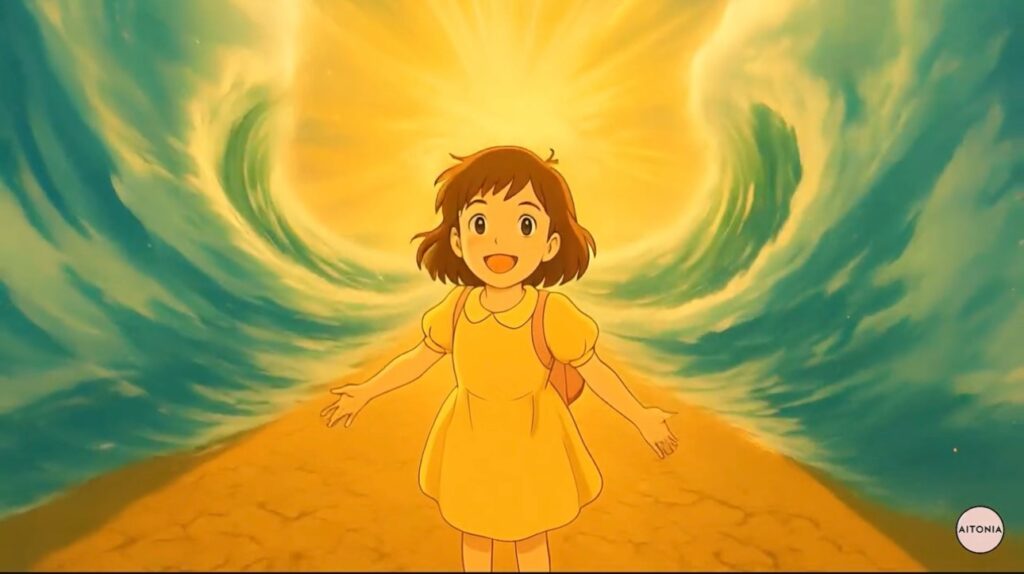
Kim angles AI in the cinematic realm saying: “Work does not always have to be (hazardous or) exhausting. When we come to a point of making AI do the ‘not so fun’ portions of our work, wouldn’t that benefit us to also develop greater passions and projects in our field?”
It is also worth noting that wholly using AI in the cinematic film does come with its different set of challenges. Through Kim’s experience of producing award-winning films, it has solidified her stance on how humans will never be replaced. Granted the conscience to make ethical decisions and solutions, those are the factors which bring greater productions to audiences.
AI to Learn About, Not Create Art
Head of Innovation and Experience Design at National Gallery Singapore, Ryan Ho is one of the creatives behind the AI National Gallery guide—G(ai)le. G(ai)le was designed primarily for visitors without existing art-historical expertise, but too shy to ask upfront about art in the institution.
Ho shares the realistic portion of using AI which is its cost. From building, curating, to maintaining or updating algorithms. On top of software, UI design is another portion hand-in-hand with G(ai)le, making it an extremely costly resource.
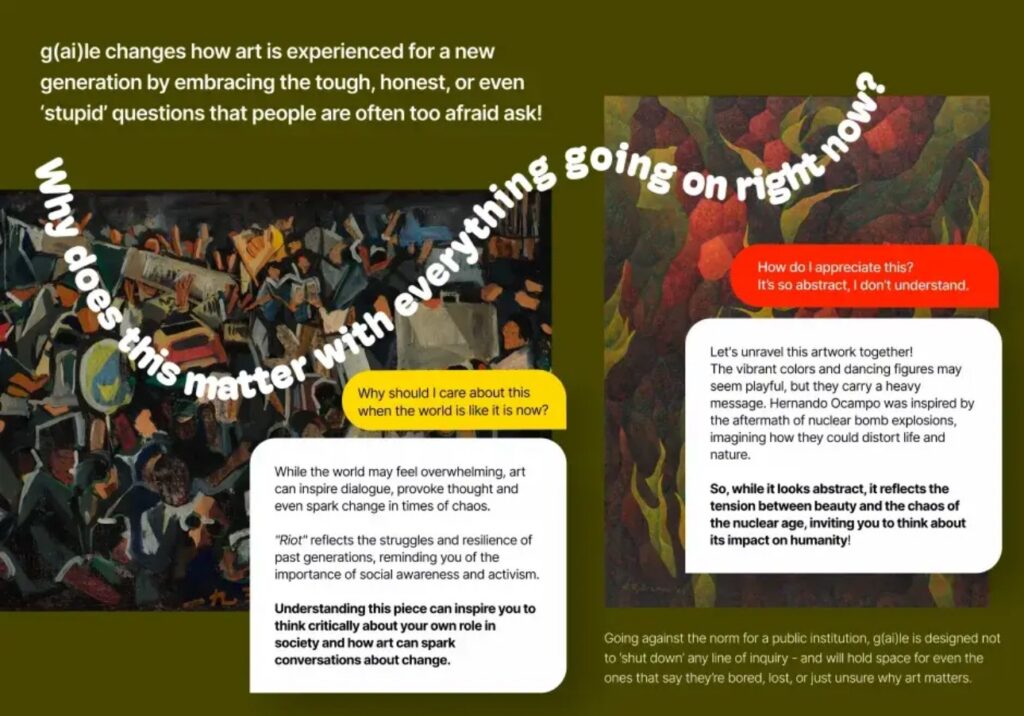
By curating an algorithm from scratch, G(ai)le’s uniqueness is how unlike typical programs, it is programmed to underscore a thematic theme in each conversation; to open up new prompts to its user to reflect upon. While usual softwares constantly elaborate on the same points or keywords indicated by a user, or states that it is unable to give an answer, G(ai)le’s program supports the critical thinking in its user – explicitly programmed to never say “I do not know”
With the success of G(ai)le, Ho is definitely open to sharing G(ai)le’s algorithm / framework with other non-profit institutions, emphasising on the mutual support between non-profits and their core missions for the public.
Sculpting Intangible Cultural Treasures
Trung Bao, the co-creator of Voice Gems, preserves the voices of rare figures to endangered species. Exhibited at Art Basel, König Galerie and the Victoria & Albert Museum, Voice Gems pioneers a new form of vocal preservation.
Regarding the use of AI, Bao affirms that heritage and memories can never be replaced by it. Rather, it is with the help of AI new unconventional ways to permanently record precious memories and figures can be found. Bao believes that as long as developed technology is used for a humane / human-centric cause, our roles in society will never die out.
“Intangible practices or assets are much harder to preserve, especially when the future generation is fed technology consistently. So if we were to take portions of these intangible routines and give it a physical form, it would seem a more likely chance for these crafts to be remembered.” — Trung Bao
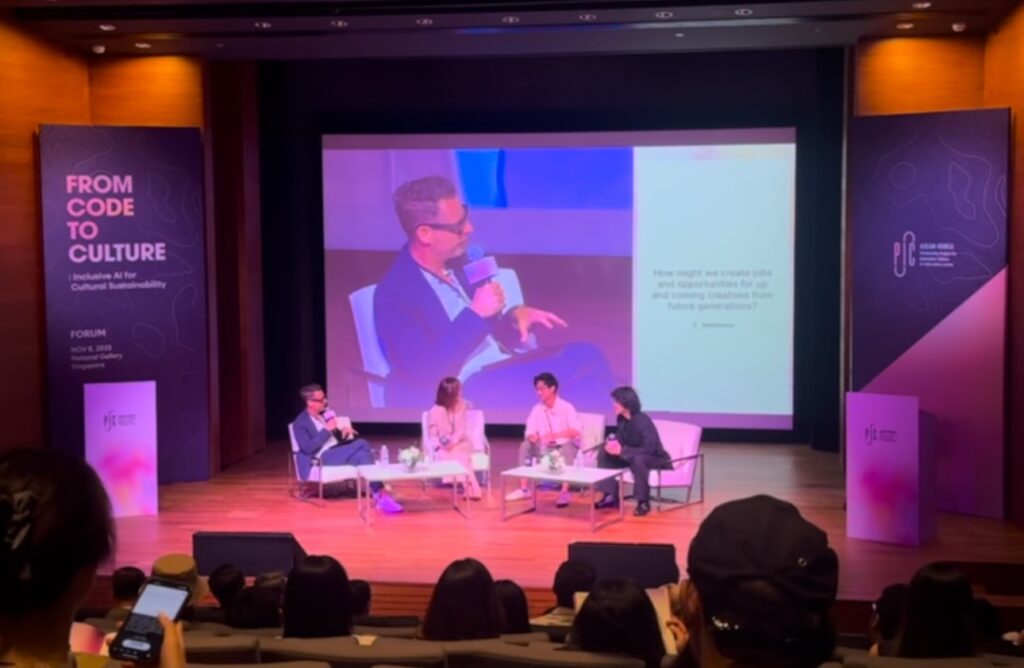
With the creation of their respective technologies, these three creatives have imparted a deeper insight into using AI to benefit than replace.
The Partnership Project for Innovative Culture (PIC) promotes cultural exchange and collaboration through arts and culture in ASEAN and Korea. It aims to build a sustainable and inclusive relationship with a long-term perspective. The annual event strives to foster mutual understanding and cooperation in ASEAN-KOREA cultural and creative industries by utilizing creative approaches to enhance cultural exchange and shared growth. n 8 November 2025, new perspectives were gained on AI’s integration with the arts.
Tags: AI, analysis, art, art history, ASEAN, conference, conversations, dialogue, Film, galleries, nationalgallerysingapore