Perspective of Curation Changed from a Basement: Jane Massey

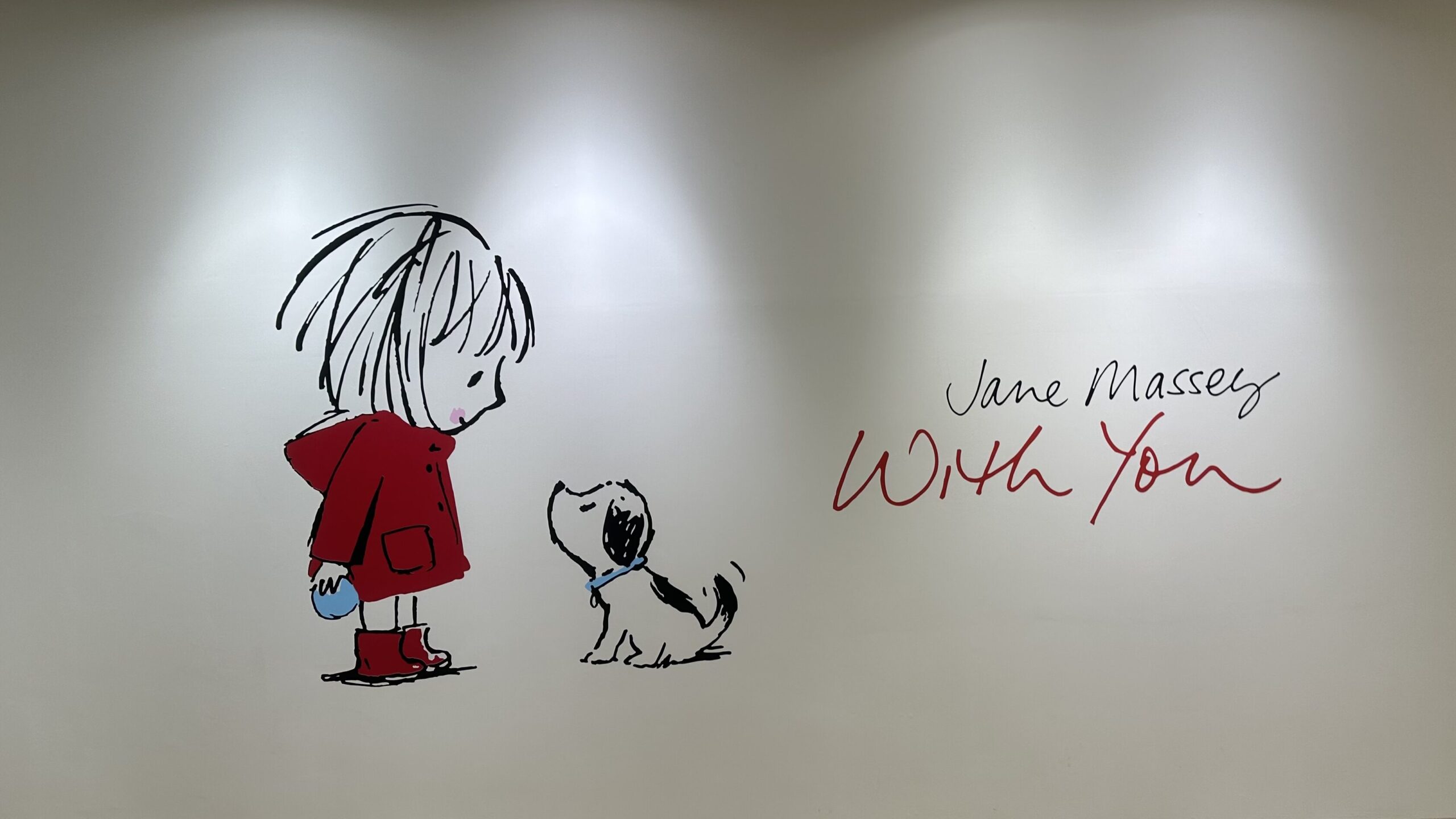
A well curated exhibition. What comes to mind when these words appear; an interactive show, maybe with the most rare artifacts, or a display with countless works filling up the gallery walls? Depending on the individual, it could only mean one, or all the factors I have listed (since art is truly a subjective topic after all). For me, it meant creating a space where visitors can focus on the exhibits without surrounding distractions like too much or too little space in the gallery– essentially named spatial curation.
Many times upon entering a gallery with (in my opinion) not enough works, I viewed it as a failure in curatorial vision or an opportunity with greater potential had there been more. That view has since changed upon my accidental visit to an exhibition held in the basement of a restaurant in Korea, by English children book illustrator: Jane Massey.

Walking into Jane Massey’s solo exhibition “With You” felt not like walking into a gallery, but an actual storybook. What I find even funnier about this statement I am making is that this exhibition was completely static. No films, no VR, no touching of framed works; yet the space was curated in a method whereby I didn’t need those elements to be swooned. A space I knew was empty by how far apart the works were placed, a place where liberty was taken upon the white gaps to act as the author and curators’ blank page.
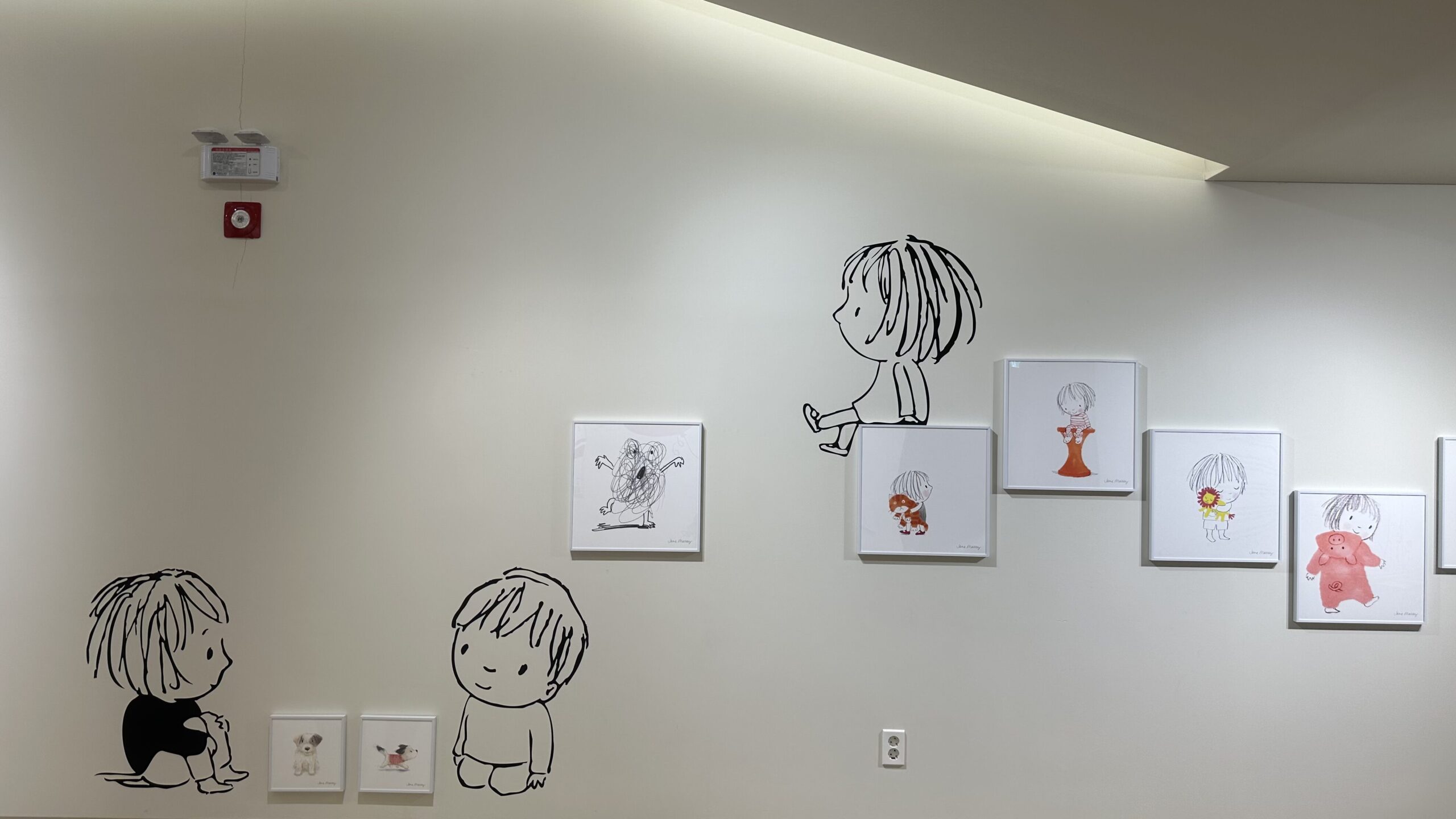
Massey’s book characters climbing outside the hung framed panels, using diagonally placed works as a seat or a stepping stone, and even swinging from the works. All the characters portrayed a common sense of playfulness, displaying it in different ways, as if able to understand the distinct personalities in her illustrations.

Although the space was smaller than most of the exhibitions I had ever gone to, I remember spending time engaging with the exhibition’s subconscious narrative until it was time for the gallery to close. In those hours I could only imagine how much deliberacy had gone into planning the space and the passion behind coordinating this arrangement considering its one and a half week duration. What I first stumbled upon thinking was an exhibition with a lack of works, was a show that completely refreshened my perspective and ideas on what curation could look like. A room where silence is all you can hear, lightly colored prints blending in with the tranquil atmosphere, and wall ornaments that can create a vast room of sound imagination. An exhibition that knew how to utilise absence for greater expression.
It was clear to me at that point where my previous views of a well curated exhibition were perhaps a little outdated. That strength in intention carried more weight than the volume of artworks ever could, how emphasising and keeping consistency with the concept of an exhibition allowed presented works to become coherent to its viewers. An exhibition where I found at least one answer to the constant battle of adding and subtracting works or words.
While there are many facets to curation like conceptualisation, spatial design, visualisation, and execution; if you were to ask me again what I deem as good curation—I would define it as a space where viewers can tell that even the gaps or pauses in-between were made and not left behind. Surely, how I gained such an epiphany from the basement of a food court serves as best evidence.